Commercial Epoxy Flooring
in Kirksville, MO
A coating system picked around the realities of your business floor: the foot and cart traffic it sees, the spills it endures and the setting it works in.
Your Floors Should Work as Hard as Your Business Does
A business floor soaks up a repetitive grind most concrete never experiences. Front doors, checkout lanes and central aisles see shoes and carts streaming through as long as the doors are open. Pallet jacks and dollies trace identical routes, grinding the same patches down. Underneath it all, bare concrete absorbs every spill and slowly falls apart.
Shoppers and clients judge a place well before they reach the front desk. Scuffed lanes, a stain by the register and crumbling concrete at the threshold make a statement even when nobody is deliberately studying the floor. That message lands regardless of intent.
Unsealed concrete under heavy commercial use also grows tougher to clean the older it gets. Hairline cracks and roughened areas from constant traffic hang onto grit that a mop can’t dig out. Staff pour more effort into the floor and get less to show for it.

The Right Floor Starts With Understanding Your Space
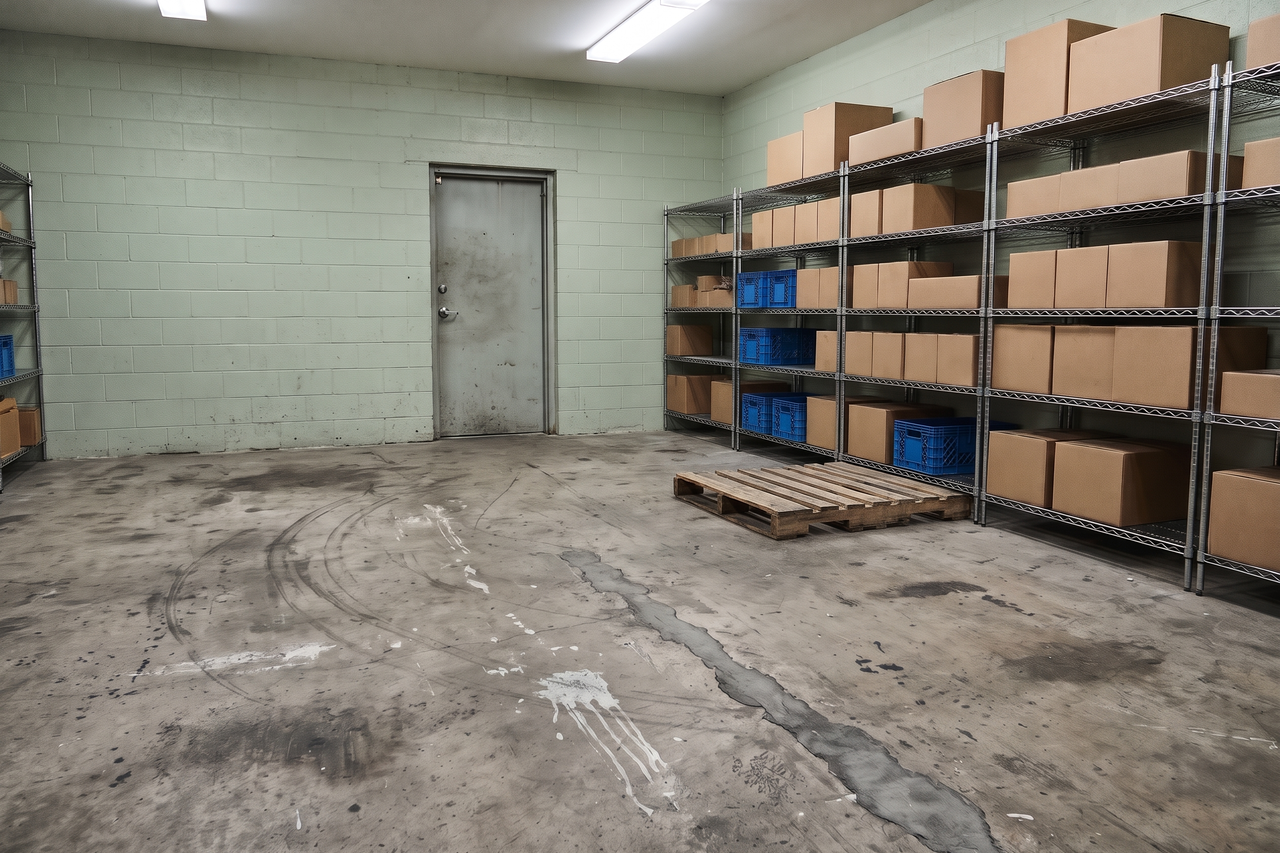
No two commercial floors carry the same load. A tire shop, a dental office hallway, a boutique sales floor and a bakery kitchen each juggle a distinct mix of traffic, cleaners, spills and mopping routines, and each leans on the floor’s appearance in its own way.
The flooring professional starts by figuring out how the floor operates in practice: the traffic and weight rolling over it, the cleaners and chemicals it regularly meets, how much customers notice it and whether access to the area needs to be scheduled carefully. The coating recommendation grows from that picture rather than a stock answer.
Commercial systems stretch across a wide range of uses. Solid color is a sensible choice for back-of-house and utility zones. Flake brings grip along with visual interest. Metallic belongs on sales floors and in reception areas, where the floor itself shapes first impressions.
A Commercial Flooring Project Without the Guesswork
Commercial coating work runs along a well-marked path from the opening conversation to the finished floor. Here’s how that path generally unfolds.
01
Tell Us About Your Property
Let us know the nature of the business, how the floor gets used on an ordinary shift, the concrete’s present state and any access limits your installer should plan for.
02
Get a Flooring Plan
The flooring professional tours the property, checks the concrete, watches the space in action and sketches out how that floor should be prepped and coated for the workload it carries.
03
Transform Your Space
Your installer works through prep and coating in a sequence the two of you review up front. How that sequence lands on the calendar, including any staging, ultimately depends on the project and the contractor, plus square footage, the selected system and inspection findings.
Planning a Commercial Flooring Project?
Explain the space and the punishment its floor takes to request a commercial flooring estimate. Rough measurements or snapshots of the present floor are welcome as well.
The Wrong Floor Can Become an Expensive Problem
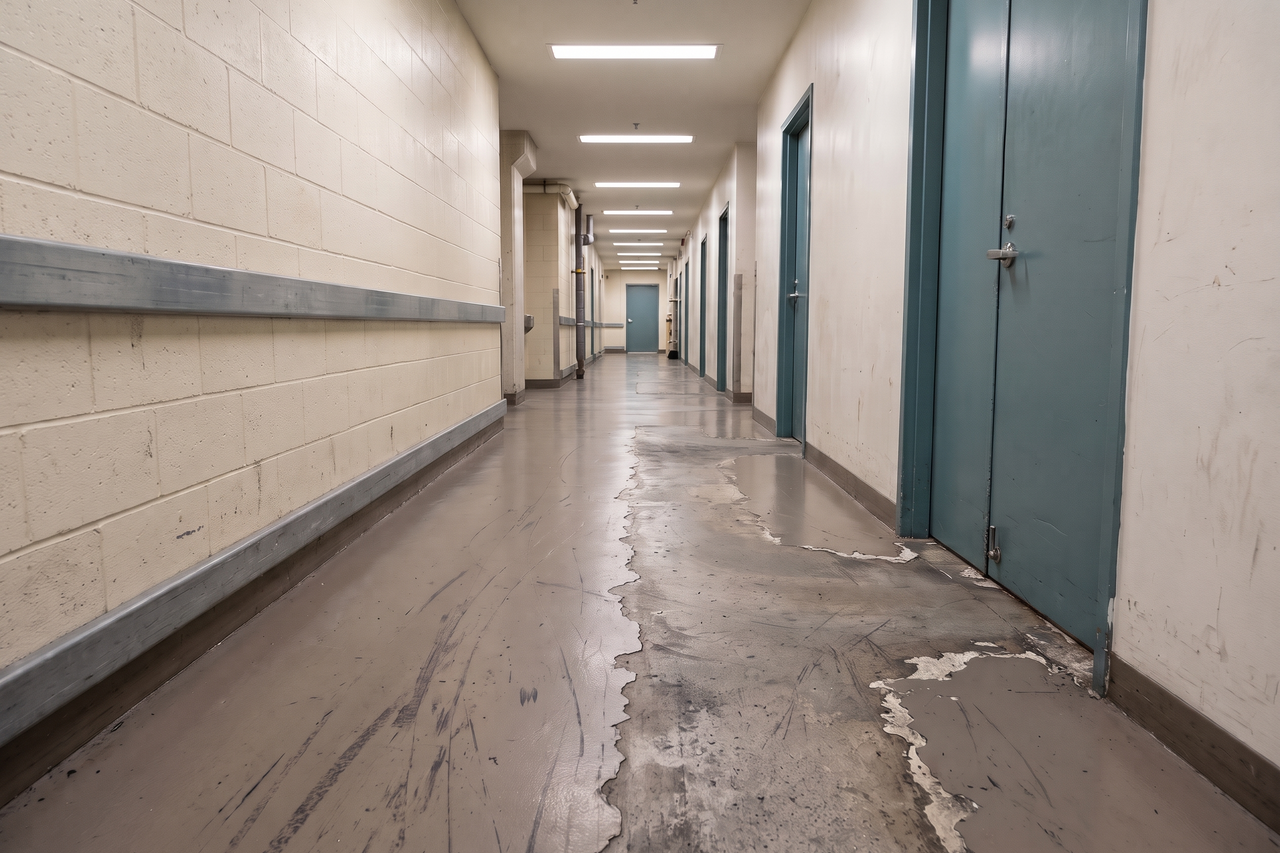
Think of a crowded hallway or stockroom where the coating has begun curling up along its seams. A blemish that seems merely cosmetic snowballs. Raised edges catch toes and cart wheels, and grime packs into crevices no mop can reach under.
Fixing that failure with the doors open costs more than product and labor. The zone has to be roped off, racks or machines moved aside, the old coating torn out, the concrete checked and prepped, then a new system laid, and all of it at a moment nobody budgeted for.
Selecting a coating that fits how the space really operates, and putting genuine effort into concrete prep before anything is applied, is the surest way to keep that headache off your calendar.
A Floor That Makes Your Space Work Better
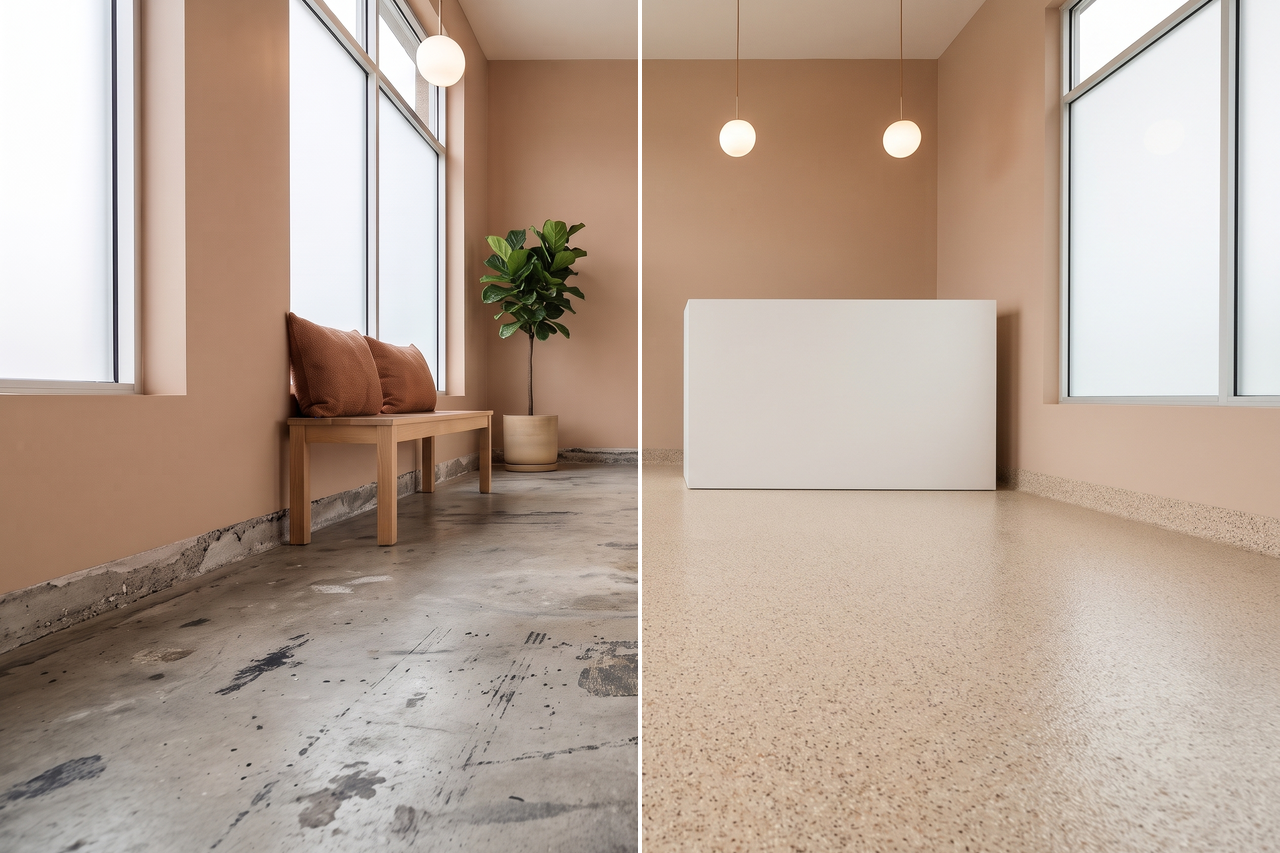
Fit the coating to what the floor truly endures and the cleaning routine lightens considerably. A spilled latte or a splash of degreaser waits on the sealed finish for a mop instead of sinking in, and no specialty cleaners are needed. Ordinary sweeping and mopping cover most of the upkeep. Repeated scrubbing also wears on a sealed floor far less than it wears on bare concrete.
The glossier surface returns overhead light better than raw slab can, which may brighten aisles and workstations with the fixtures left as they are. Safety lanes, color-coded zones and directional striping can be worked in, based on the chosen system’s capabilities and your installer’s advice for that floor plan.
Picked with its environment in mind, a coating turns the floor from a nagging maintenance cost into a genuine asset for the business.
What Does Commercial Epoxy Flooring Cost?
Price comes down to the specifics: total square footage, the concrete’s condition, how much prep and crack repair the slab demands, the system suited to the setting and the finish you settle on. Requests for tougher chemical resistance, added traction or decorative specialty finishes raise prep and materials alike.
Can the work dodge peak business operations or be split into stages? Each of those depends on the project and the contractor, making them worth bringing up at the outset, before the estimate firms up.
Common Commercial Flooring Questions
Will we have to close our doors while the coating goes down?
It hinges on the building and how much floor is involved. Some layouts allow one zone to be coated while business continues elsewhere; others need the whole floor emptied. Any scheduling or phasing plan for your building depends on the project and the contractor, though your installer can describe what’s workable once the space has been reviewed.
What does upkeep look like on a coated commercial floor?
Far less than raw concrete demands. Spills stay up top and come off with everyday cleaners before soaking in. Regular sweeping and mopping handle most upkeep, and a sealed floor tolerates repeated scrubbing much better than unprotected concrete facing identical conditions.
Can epoxy stand up to heavy carts and machinery?
It comes down to the coating product and how roughly your equipment treats the floor. Certain coatings aren’t meant to take nonstop stress from heavy loaded carts, ride-on scrubbers or a busy mix of forklifts and foot traffic. During the visit, the flooring professional sizes up the machines, the weight they carry and how often they travel across the floor before suggesting a system.
What goes into choosing the coating for a business floor?
It begins with learning how the floor is used. The review weighs foot and wheeled traffic, the cleaners and chemicals the surface regularly meets, how sharp the floor has to look and any access issues around the work. Those findings drive the recommendation.